Your Biological Dashboard: Why Wearables Are Becoming as Important as Your Financial Plan
 A new collaboration between ŌURA and LillyDirect is the future of healthcare – arriving now!
Healthcare is shifting from episodic snapshots to continuous biological feedback – and that shift is actually a big deal for anyone serious about their retirement lifestyle in this age of AI and longevity science.
The Old Model Is Incomplete
Our current, reactive, episodic medical system works like this: see the doctor, get the test, receive the prescription, wait months for the next check-in. While doctor visits and diagnostics remain essential, most of your health doesn’t happen in a clinic. It happens in the thousands of ordinary moments between appointments – sleep, meals, stress, movement, recovery, medication adherence.
That’s the gap that makes this collaboration so interesting.
What the Lilly–ŌURA Collaboration Actually Signals
GLP-1 medications have already reshaped conversations around metabolic health and weight loss (If you are new to the GLP-1 craze, see the GLP-1 impact summaries at the end). Lilly’s new oral GLP-1, Foundayo, extends that reach further.
But the more important development is the feedback loop around the medication.
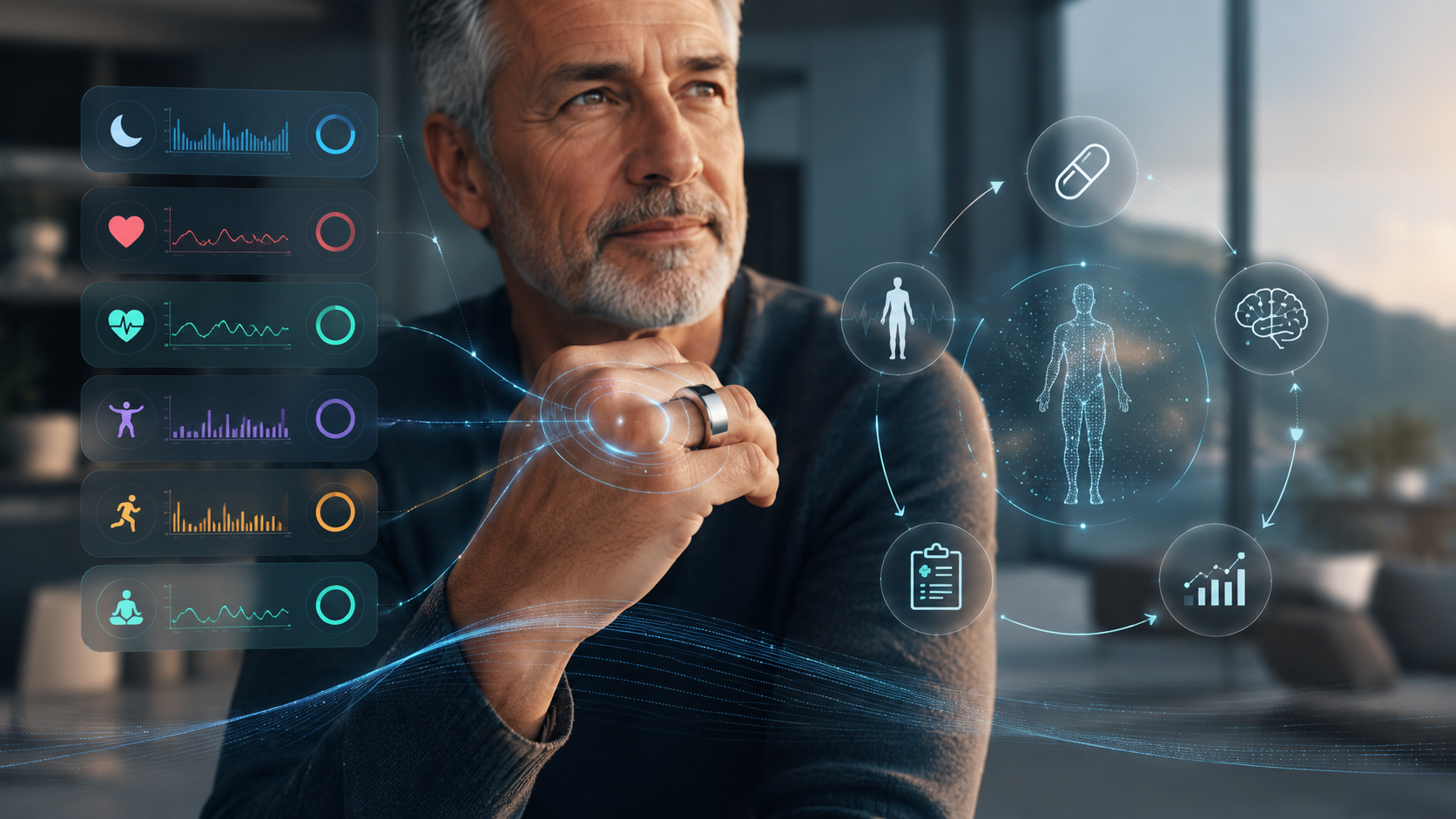
The ŌURA ring is a smart ring “wearable” that continuously tracks sleep, heart rate, heart rate variability, body temperature, and activity to give you a daily readiness and recovery score via its app. ŌURA’s GLP-1 Insights feature lets users track doses, side effects, and real-time biometric changes – sleep quality, recovery scores, activity trends, resting heart rate – all on their personal dashboard.
The bathroom scale is a single data point. A continuous biometric tracking system via health wearables is a “dashboard” that can help tell you what’s happening to your health while you’re living your life.
Why This Is a Retirement Singularity Issue
Retirement planning used to be almost entirely financial but that’s no longer close to being sufficient.
In the emerging era of AI-assisted medicine, longevity therapies, and personalized health data, healthspan is a core retirement asset – the years you can live with energy, independence, mental clarity, and purpose.
The Lilly–ŌURA model points toward where healthcare is heading: medication, behavior, continuous data, and personal feedback working as an integrated system. Less “wait until something breaks.” More “notice the pattern before it becomes a problem.” This is a long time coming, but I think it’s important for you to recognize that this is finally arriving!
What to Do Now
You don’t need an ŌURA Ring specifically. An Apple Watch, Garmin, or comparable wearable device works. I used to wear a simple step-counting band but have now switched to a Hume band. Much more health data.
The point is to start generating continuous health data – then use it:
- Track the basics: sleep, resting heart rate, HRV, daily movement, recovery
- Look for patterns: what improves your numbers? What degrades them?
- Bring the data to your doctor – not as a diagnosis, but as better questions
Data doesn’t replace clinical judgment. And more numbers don’t automatically create better health. But the right signals, tracked consistently, help you act earlier and adjust smarter. Becoming proactive about your health vs. reactive is the key.
The Bigger Picture
Advanced medicines like GLP-1s are becoming the engine. Wearables are becoming the data dashboard. AI is beginning to connect them.
This is early. The integration of wearables, continuous glucose monitors, lab data, home testing, and AI health assistants is still emerging. But the direction is clear.
In the Retirement Singularity, the goal isn’t simply to live longer. It’s to stay healthy, capable, and engaged long enough to benefit from the extraordinary changes now coming into view.
Your financial dashboard matters, but your biological dashboard matters just as much.
Live long, live well, and prosper!
Michael
GLP-1s Impact Summary:
GLP-1s and other peptides are emerging as important health optimizing treatments. Now used by over 20 million people worldwide, GLP-1 receptor agonists (semaglutide/Ozempic/Wegovy and tirzepatide/Mounjaro/Zepbound) are showing impressive benefits that extend well beyond weight loss and blood sugar control. Many effects appear partly independent of weight reduction, involving direct anti-inflammatory, metabolic, and organ-protective actions.
– Cardiovascular protection: Semaglutide cut major heart events (MACE) by 20% in the SELECT trial for overweight/obese people with existing heart disease.
– Kidney benefits: In the FLOW trial, semaglutide reduced major kidney disease events by 24% in type 2 diabetes patients with CKD and slowed kidney function decline.
– Sleep apnea treatment: Tirzepatide is FDA-approved for moderate-to-severe obstructive sleep apnea in obese adults, cutting breathing disruptions by ~25–29 events/hour.
– Weight & metabolic health: Typical 15–21%+ weight loss plus better blood pressure, cholesterol, and blood sugar control.
– Brain & addiction support: Emerging data link GLP-1s to lower dementia risk and reduced substance use disorders (alcohol, opioids, etc.).
– Liver health signals: Promising reductions in liver fat and inflammation for metabolic liver disease (MASH/NAFLD).
– Longevity potential: Preclinical lifespan extension; early human data show semaglutide slowed epigenetic aging clocks (~9% slower pace), supporting broader healthspan benefits through multi-organ protection.
Link to the Lilly/ŌURA announcement;
Stay informed with RS
Want more perspective on AI, healthy longevity and life after 60? Join me for the Retirement Singularity Weekly Briefing, plus email notifications of new blog posts.
Subscribe to the RS Weekly Briefing and blog updates. You can unsubscribe at any time.